

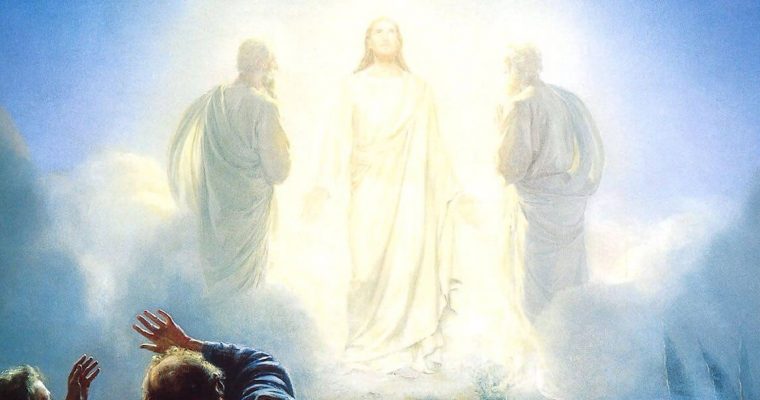
The Transfiguration of the Lord is the contrast to the cross, the opposite of the shadows of Calvary. The apostles were enraptured by the radiant vision of Tabor, a foretaste of what we shall contemplate in Heaven, and by which Jesus wished to prepare them for the moment of trial. That happy moment, though fleeting, in which the souls of the apostles remained within the presence of God and felt God present, is what the Lord wishes to grant us through prayer.
Live, therefore, inwardly. There, in the depths of your soul, is your God. In prayer you will learn to live in God, with God, and for God, to live His light and His love.
What is prayer
Prayer is a familiar conversation with God; it is a longing for God, for His intervention to help our weakness, for Him to come and show mercy. Prayer is the school of Christian life, the school of love. All my renewal, all my spiritual vigor, every possibility of overcoming difficulties and crises, every capacity, every decision, and every strength in service is born, grows, and bears fruit in prayer.
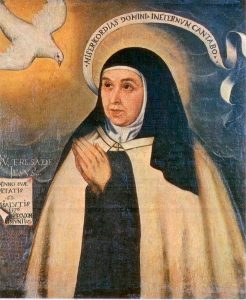 Saint Teresa of Jesus said that prayer is “being with the One whom we know loves us.” And she added that in prayer the important thing is not to think much, but to love much.
Jesus says in His Gospel: “Men ought always to pray and not lose heart” (Lk. 18:1). In prayer we will find a remedy for all our weaknesses and for remaining steadfast in virtue. Through a life of prayer, everything finds a remedy. Cultivating our friendship with God is what will help us bear the crosses and difficulties of life and persevere in our faith.
Christ spent His nights in prayer, absorbed in His Father, and then during the day He went about doing good.
How to pray
To pray requires recollection and silence. We must place ourselves in the presence of God and invoke Our Lady and Saint Joseph—Masters of prayer—to help us pray well.
We cannot say that we do not have time to pray. Just as we make time to converse with those we love, we must set aside an exclusive time each day to converse with God, whom we are obliged to love—by the First Commandment—above all things. For this we will have to postpone or give up other less important activities, perhaps some amusement or entertainment, excessive use of the internet, or the time we spend in useless conversations. Sometimes it will require sacrificing something we enjoy, but which is not essential for life.
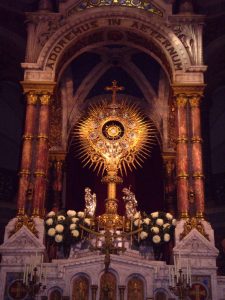 The ideal place is a church or chapel before the Blessed Sacrament, but if that is not possible, as the Lord says: “when you pray, go into your room and, having shut the door, pray to your Father who is there in secret...” (Mt. 6:6).
To pray is to place oneself before God like a child who abandons himself trustingly to his Father in Heaven. Christian prayer is filial, serene, trusting, and intimate: its interlocutor, the Other to whom it speaks, is a Father—indeed, the Father. Jesus said: “Pray then in this way: Our Father.” In the teaching of Jesus, the Our Father is the “summary of the whole Gospel.” The Our Father is of divine institution. Pray it often.
Prayer is a gift of the Holy Spirit, and we should ask Him for it. For each person, the best way to pray is the one that helps him most to find God. Nevertheless, it is advisable to approach prayer with a book to focus the imagination: Sacred Scripture, the Catechism of the Catholic Church, The Imitation of Christ, meditations on the Virgin Mary, or Lives of the Saints.
A good method of prayer is to alternate reading and meditation. The truths of faith learned in reading and digested in meditation produce an impact: first they impress me, move me, and stir me, and then they produce love within me, which is trust, humility, reverence, repentance, and holy desires. At the end of prayer, it is fitting to draw some concrete resolution for improvement in our Christian life.
If we pray well, a change will take place within us: where there was pride and hardness, there will begin to be humility and gentleness; where there was irritability, there will begin to be meekness; where there was contempt for others and gossip, there will begin to be appreciation, admiration, and discretion; where there was rebellion, there will begin to be submission; where there was division, there will begin to be unity; where there was sorrow, there will begin to be joy; and where there was “only me,” there will begin to be “only God.” God will fill all our emptiness; He will be the meaning of our entire life.
There is a form of prayer called vocal prayer: such as the recitation of the Rosary, the practice of the Stations of the Cross, and the Liturgy of the Hours, which can also be accompanied by meditation. The prayer par excellence is the Holy Sacrifice of the Mass, because it is the renewal of the Sacrifice of Our Lord Jesus Christ offered for us.
Prayer always triumphs
Sister Lucia of Fatima said that “most of humanity is a victim of ignorance, seeking happiness where it cannot be found and sinking ever deeper into misery and wretchedness. Let us cast a glance upon the world! What do we see? What picture presents itself before our eyes? Wars, hatreds, ambitions, kidnappings, thefts, revenge, fraud, murders, immoralities, etc. And, as punishment for so many sins: catastrophes, illnesses, disasters, hunger, and every kind of pain and suffering, beneath whose weight humanity groans and weeps... All this shows us the great need we have for prayer, for drawing near to God through prayer. And through prayer one obtains forgiveness of one’s sins, strength, and grace to resist the temptations of the world, the devil, and the flesh. Therefore Jesus recommended to His apostles: ‘Watch and pray that you may not enter into temptation; the spirit indeed is willing, but the flesh is weak’ (Mt. 26:41).”
There will be moments of dryness in our personal prayer, but it is precisely there that we will demonstrate our fidelity to the Lord. Let us never abandon prayer because of the dryness we encounter in it. Even if there are moments when everything seems to be in turmoil around us and we feel unbearable distress, or when humanly incomprehensible events shake our faith, let us fear nothing: let us remain steadfast in prayer, and God, even though we may not feel Him or perceive Him, will continue to be our impregnable refuge.
Let us not forget that prayer always triumphs and always receives an answer: to Jacob’s prayer, “I will not let You go unless You bless me,” there was only a simple and immediate response from God: “and He blessed him there.”
Resolution for the week: With the help of Our Lady, dedicate an exclusive time each day to prayer.